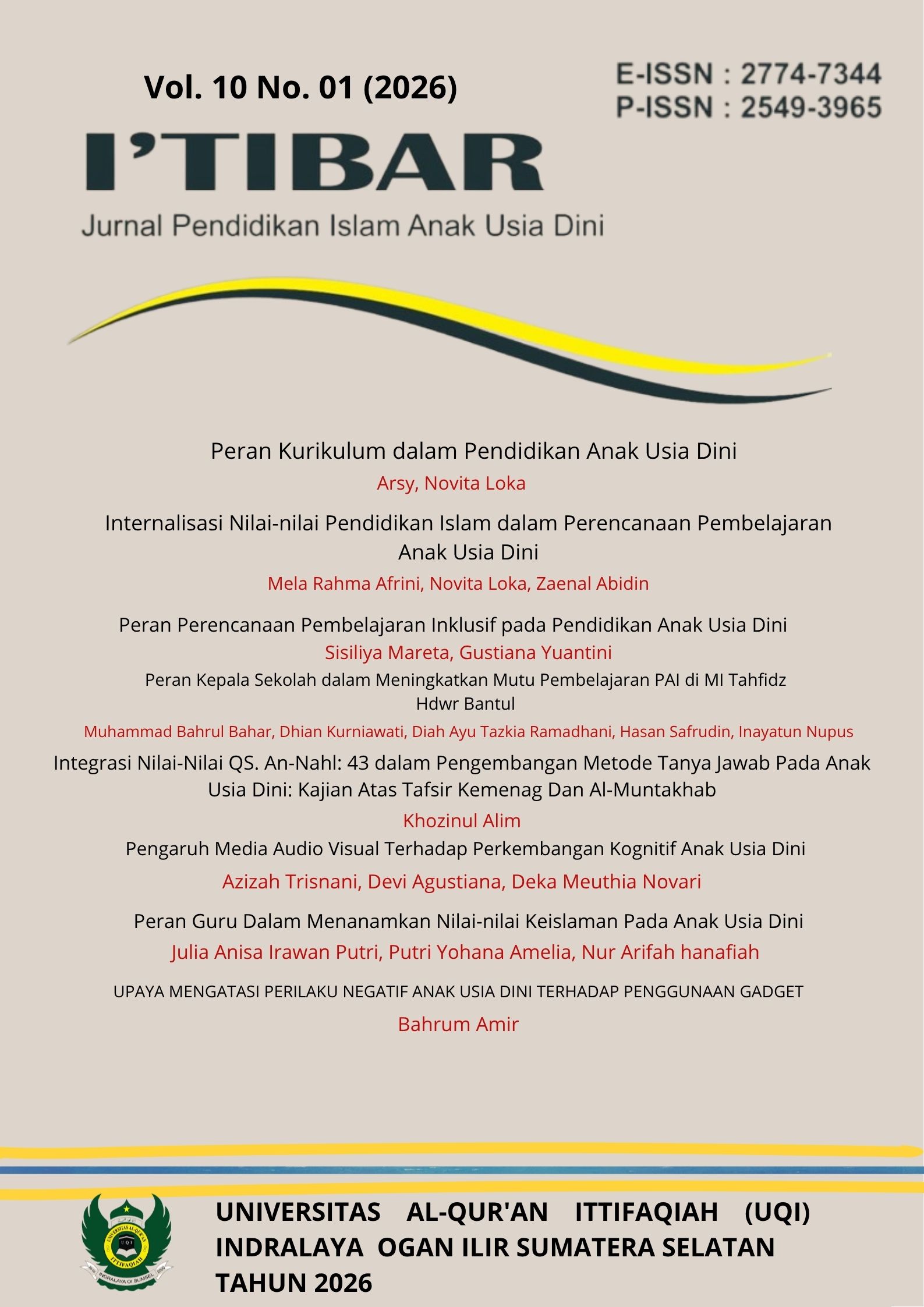
Peran Perencanaan Pembelajaran Inklusif pada Pendidikan Anak Usia Dini
DOI:
https://doi.org/10.53649/81q2ap20Keywords:
Inclusive education,, ECE, learning planning,, child development,, qualitative approach.Abstract
Inclusive learning planning in Early Childhood Education (ECE) is a strategic step to ensure that all children, including those with special needs, receive equal educational rights in a supportive and accommodating environment. This study aims to identify the role of inclusive learning planning in creating adaptive and optimal learning environments for early childhood development. This research employed a qualitative method with a field-based approach, conducted at TK IT Menarah Fitrah, Ogan Ilir Regency. Data were collected through participatory observations, in-depth interviews, and documentation, then analyzed using the interactive model of Miles and Huberman, which includes data reduction, data presentation, and conclusion drawing. The findings reveal that well-structured inclusive learning planning, encompassing aspects such as physical environment, learning strategies, and adaptive evaluation systems, increases children's active participation by up to 85% and supports their social-emotional development. Furthermore, comprehensive planning effectively accommodates the diverse characteristics of children and enhances collaboration between educators, children, and parents.